
Blogs
Do You Need New Flashings When You Replace Your Spouting?
September 10, 2026
Most re-spout quotes cover the spouting, the brackets and the downpipes. Flashings often don’t come up until the crew is already on the roof looking at what’s underneath the old gutter.
Why the Question Comes Up During a Re-Spout
A flashing sits between the roof edge and the spouting, directing water into the gutter instead of behind it or down the fascia. It’s a strip of metal doing a job most homeowners never think about, right up until it fails.
When we take the old spouting off a house, that flashing becomes visible for the first time in years without a run of gutter sitting in front of half of it. Sometimes it’s in good condition. Sometimes it’s the reason the fascia has been quietly rotting behind the paintwork, and the spouting was never the actual problem.
It rarely comes up in a phone quote, because nobody can see the flashing from the ground. It’s an on-site call, made once the old spouting is off and the roof edge is exposed properly for the first time in however many years it’s been up there.
New flashings aren’t automatic on every re-spout. Whether they’re needed comes down to condition, not age, and it’s worth a proper look rather than assuming either way.
When Existing Flashings Can Stay
If the flashing matches the profile of the new spouting, sits flat with enough upstand under the roofing, and the coating hasn’t failed anywhere along the run, there’s often no reason to replace it. Reusing sound flashing keeps the job cheaper and faster, and it’s the answer we’d rather give than sell metal that isn’t needed.
We check the laps between lengths, the cut ends, and the fixing points where a screw or clip has broken the coating. Those are the spots that fail first, well before the flat run of the flashing shows any sign of wear.
Age on its own isn’t the test. A twenty-year-old flashing in a dry, sheltered position can outlast a five-year-old one on a wall that copes with a lot of wind-driven rain.
When They Should Be Remade
Corrosion at the Roof Edge
Rust through a flashing isn’t cosmetic. Once the coating has failed and the steel underneath is pitting, water eventually finds a way through, usually tracking down behind the fascia where nobody sees it happening until the paint starts blistering or a stain shows up on the soffit. Corrosion nearly always starts at a lap join or a cut end, where the factory coating was never continuous in the first place. If we can see daylight through a seam, or flaking along the edge, that flashing comes off with the old spouting.
Coastal salt exposure and the nor’wester driving rain hard against roof edges both speed this up around Canterbury, which is part of why two houses of the same age can need completely different decisions. A sheltered inland property might carry the same flashing for decades. One closer to the coast, or sitting exposed to the prevailing wind, can show pitting well before that.
Profile Change
Moving to a different spouting profile, or switching from sectional to continuous spouting, changes the geometry the flashing has to sit against. A flashing cut for the old profile won’t match a different one properly, and forcing it usually shows up later as a gap or a lip that catches leaves and debris instead of shedding them into the gutter.
Fascia Replacement Underneath
If the fascia is being replaced or capped as part of the same job, the flashing has to come off regardless, because it’s fixed to the fascia rather than the roof. There’s no way to work around it without pulling the flashing first, so this decision is usually made for us rather than debated.
Old Sealant-Dependent Details
Some older installs rely on sealant to bridge a gap the flashing should be covering on its own. Sealant degrades a lot faster than steel does, and it’s rarely reapplied until something has already started leaking. If a flashing has only ever held because of a bead of silicone applied years ago, that’s not a detail worth carrying into a new spouting run.
What It Adds to a Job
Remaking a flashing during a re-spout is a small addition to the job, not a second one. We’re already on site with the roof edge exposed and the old spouting off, which is the cheapest point in the whole process to fold and fit a replacement. The extra material and time are minor next to what it would cost to come back and do it as a standalone repair.
Doing it separately later usually means a ladder crew or scaffold coming back for something that would have taken an extra hour the first time. It also means paying for an access charge twice instead of once, and coordinating a second visit around whatever else is happening on the property by then.
This is also why we’d rather flag a flashing at the quoting stage wherever it’s visible, rather than leaving every decision until the spouting is already off. A homeowner who knows a flashing might need remaking before the crew arrives isn’t caught out by a decision made on the day.
The Risk of Doing Half the Job
New spouting fitted over a flashing that’s already failing can look fine for a season or two. The gutter does its job, the paint is fresh, and the actual problem is a strip of corroding steel sitting behind it, still letting water track down onto the fascia and the framing underneath.
We’ve been called back to re-spouted houses where the real damage was never in the gutter at all, and the flashing was the part nobody checked the first time. By then it’s a repair that involves pulling back cladding or lifting roofing sheets, rather than a flashing that would have taken a few minutes to remake alongside the spouting.
Getting it right at the point of replacement is what keeps that call from turning into a repair job three years down the track. It’s a cheap decision to get right early and an expensive one to get wrong.
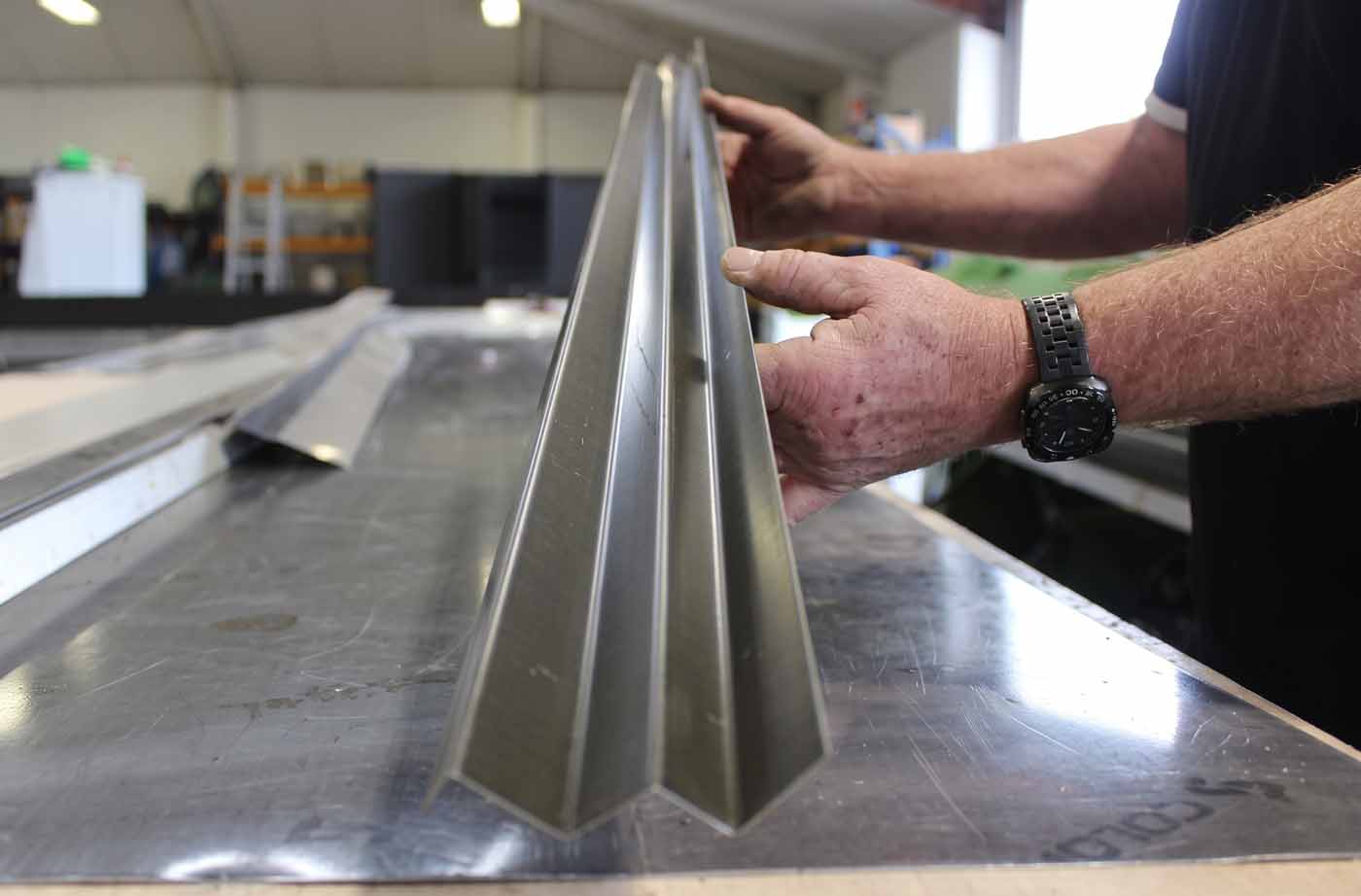
We Fold Flashings On Site
We fabricate flashings ourselves rather than ordering standard lengths, so when custom flashings are needed we can cut to the actual roof edge instead of forcing a stock size to fit. It’s the same process, on the same visit, as the spouting itself, which means no second trip and no separate quote to chase.
If you’re getting quotes for a spouting replacement in Christchurch, ask whether flashings are included in the price or left as a possible extra once work starts. We check the flashings, any fascia replacement the job needs, and whether you need new downpipes too at the same time, so nothing gets missed between trades and nothing gets left for later.
Organisations We Are Affiliated With